


Stem Cell Facelifting
Offered at our convenient location in Hamburg
A stem cell facelift is a non-surgical cosmetic procedure that uses the patient’s own fat to restore the youthful volume of the face. The standard facelift involves a series of incisions to address facial sagging. Such surgical procedures can lead to long recovery times and can be painful. The stem cell facelift is a gentler alternative. In this procedure, small amounts of the patient’s own fat are taken, processed, and then strategically injected into the face. The stem cells contained in this fat promote tissue rejuvenation and add volume to the face. The result is a fuller, revitalized appearance.
Wrinkles, fine lines, and ptosis (the medical term for sagging) are common signs of aging. Another sign is sunken facial features. The uneven distribution of soft tissue can lead to asymmetries, drawing even more attention to this area. Research confirms that these changes can alter patients’ self-perception and lead to harmful psychological, emotional, and social effects.(1)
Rediscover your youthful beauty with the help of Dr. Dalia Tobbia. As a specialist in plastic, aesthetic, and reconstructive procedures, she can help you skillfully emphasize your feminine beauty. It all starts with a personal consultation in her Hamburg practice. During the conversation, you will have the opportunity to discuss your wishes and concerns and learn how Dr. Dalia Tobbia can help you rejuvenate your face and boost your self-confidence.
Call Plastische Chirurgie am Klosterstern at +49 (0) 40 46 091 076 or send us an online message for more information.
Contents
- 1 Before and After Photos
- 2 About stem cells
- 3 Autologous procedures
- 4 What are stem cells and how do they help?
- 5 Benefits of a stem cell facelift
- 6 Candidates
- 7 Personal consultation
- 8 Preparation
- 9 Stem cell facelift: Procedure
- 10 Recovery
- 11 Results
- 12 Cost of a stem cell facelift in Hamburg
- 13 Frequently asked questions
Before and After Photos


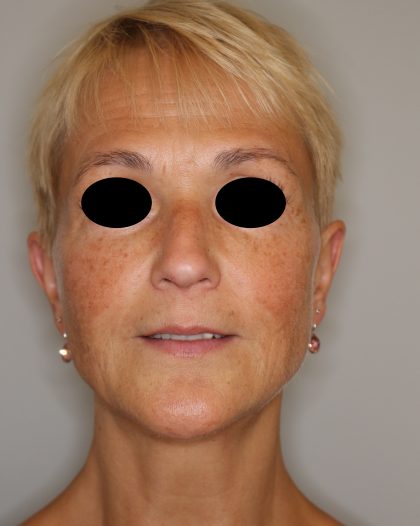

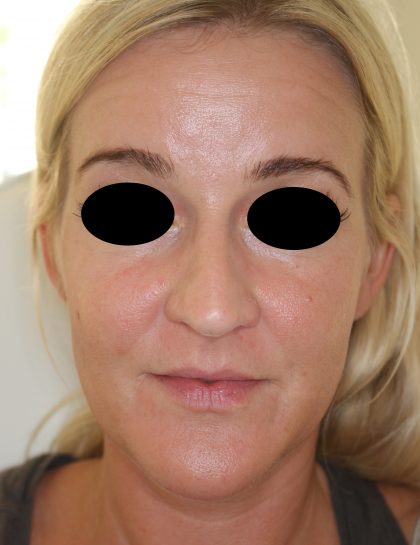
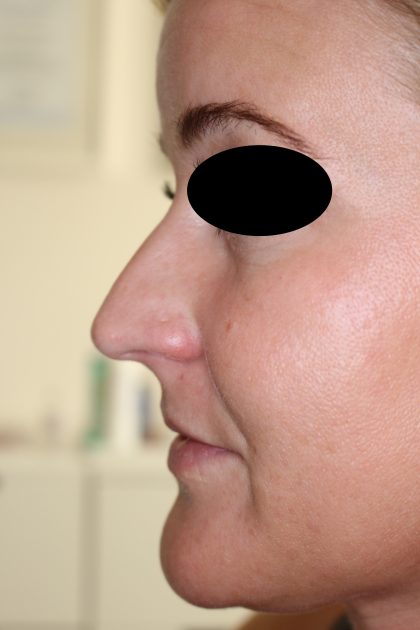
About stem cells
A stem cell facelift is a way to restore the youthful fullness of the face. But where do the cells come from, and what science is behind the procedure?
Autologous procedures
Stem cell facelifts are classified as autologous procedures. The term “autologous” refers to the use of the patient’s own tissue. For example, fat transfer is also possible for other areas of the body, such as the breasts,. Many patients prefer this method to standard implants because the result is more natural. Other treatments use platelet-rich plasma (PRP), a procedure in which nutrient-rich plasma is extracted from the patient’s blood and reintroduced to the body at a specific site. PRP, also known as autologous blood therapy, is used, for example, to strengthen hair roots or rejuvenate the intimate area after childbirth.
What are stem cells and how do they help?
Stem cells are unspecialized cells in the body that can self-renew and differentiate into any other cell type.(2) In recent years, scientific advances have led to an increased use of stem cells in regenerative medicine and cosmetic procedures.
There are many intrinsic (internal) and extrinsic (external) factors that contribute to skin aging. One of the main causes of extrinsic skin damage is exposure to UV rays, known as photoaging. Symptoms include:
- Dryness
- Roughness
- Irregular pigmentation
- Lesions
- Skin cancer
Intrinsic skin aging, i.e., aging from within, is associated with a loss of skin elasticity and a decrease in collagen production. Collagen is a major component of the extracellular matrix, a type of scaffold that supports and strengthens the skin from within. It is widely known that collagen production decreases with age. This leads to the breakdown of the scaffold.
As the skin ages, wrinkles and fine lines form. The signs of skin aging become increasingly visible over time. Research shows that stem cells can promote the rapid proliferation of dermal fibroblasts (which produce collagen) by secreting growth factors, i.e., naturally occurring substances that can stimulate cell production.(2) A stem cell facelift can make the skin appear younger, healthier, and noticeably smoother by strengthening its scaffold.
Benefits of a stem cell facelift
A stem cell facelift is a solution for people who want to achieve an age-appropriate result without the stiff appearance commonly associated with standard facelifts. Other benefits include:
- Restores lost facial volume
- Smooths and defines facial features
- Improves skin texture and pigmentation
- Stimulates the production of new collagen
- Natural, long-lasting, well-tolerated treatment
- No scalpel, no cuts or stitches required
- Shorter recovery time after treatment compared to a standard facelift
Candidates
A stem cell facelift is suitable for men and women who want to rejuvenate their face in a less invasive way than with traditional cosmetic surgery. Perhaps you have a busy schedule and no time to recover at home for several days or weeks.
Patients who wish to undergo a non-surgical facelift should be in good health and have no acute or chronic illnesses that could affect the outcome of the treatment. Additionally, you should have suitable fat donor areas.
To find out if you qualify for the stem cell treatment, it is best to contact Plastische Chirurgie am Klosterstern directly to schedule a personal consultation with Dr. Tobbia. You can reach our Hamburg practice at +49 (0) 40 46 091 076 or through our simple online form. Our dedicated staff is always happy to assist you!
Personal consultation
Your personal consultation with Dr. Dalia takes place in her modern practice near the Klosterstern subway station in Hamburg. During the consultation, you will be asked to provide information about your health status and what you would like to change about your facial expression. Dr. Dalia will assess the tissue depletion in various areas of your face and examine your skin laxity and wrinkles. Based on this information, she will determine the target areas for your stem cell facelift and create a personalized treatment plan tailored to your aesthetic needs.
Preparation
Preparing for your stem cell facelift is simple. Dr. Dalia will provide you with detailed written instructions before your treatment appointment, which may include:
- Avoid taking anti-inflammatory medications (such as aspirin and ibuprofen) for a week before the procedure.
- Talk to your general practitioner and Dr. Tobbia if you are taking blood-thinning medications.
- Drink plenty of water in the days leading up to the treatment and on the day of the treatment itself to stay well-hydrated.
Stem cell facelift: Procedure
A stem cell facelift consists of three steps:
- Extraction – Once the anesthesia takes effect, Dr. Dalia extracts the donor fat from a predetermined area of your body. Common areas for fat extraction are the abdomen and thighs. As with liposuction, a thin cannula is inserted under the skin to suction out the required amount of fat.
- Preparation – Once the required amount of fat has been extracted, Dr. Dalia will treat the tissue. The fat is cleaned and processed to allow optimal application in the treatment areas and to ensure the health of the fat cells. Once this process is complete, it will be prepared for injection.
- Injection – Dr. Dalia injects the autologous fat with the stem cells into the areas of your face to be treated. She will target the areas most affected by volume loss. After the injection, the stem cells present in the fat tissue stimulate the body’s own collagen production. The result is a rejuvenated skin appearance.
Recovery
A stem cell facelift is associated with minimal downtime. You can go home the same day as soon as you receive the OK from Dr. Dalia. The donor area and the injection sites on the face may be slightly painful and swollen. These discomforts are usually mild and can be treated with over-the-counter pain relievers. Dr. Dalia will provide you with appropriate recommendations. We advise you to follow our post-treatment instructions to achieve the best results.
Results
Every patient is different, but many notice changes in their face within the first few weeks. On average, it takes 6-8 weeks for the final results to become visible. After that, you can enjoy the results of your stem cell facelift for many years!
Cost of a stem cell facelift in Hamburg
Since needs vary greatly, the costs for the facelift can also vary. Dr. Dalia will provide you with a cost estimate at the end of your personal consultation.
Contact Plastische Chirurgie am Klosterstern at +49 (0) 40 46 091 076 or through our website to inquire about this and other beauty treatments and look as young as you feel.
Frequently asked questions
Are the underlying facial muscles affected by a stem cell facelift?
No. Unlike a traditional facelift, a stem cell facelift involves extracting fat from a donor area, processing it, and then injecting it superficially into areas marked by volume loss. There are no long cuts or stitches, and the facial musculature is not affected.
Can a stem cell facelift tighten sagging facial skin?
Stimulating collagen production promotes the tightening of facial skin in the weeks following a stem cell facelift.
References
- Swift, A., Liew, S., Weinkle, S., Garcia, J. K., & Silberberg, M. B. (2020). The Facial Aging Process From the “Inside Out.” Aesthetic Surgery Journal. https://doi.org/10.1093/asj/sjaa339
- Zakrzewski, W., Dobrzyński, M., Szymonowicz, M., & Rybak, Z. (2019). Stammzellen: Vergangenheit, Gegenwart und Zukunft. Stammzellforschung & Therapie, 10(1). https://doi.org/10.1186/s13287-019-1165-5
About Dr. Dalia Tobbia
Plastische Chirurgie Am Klosterstern
- Board certification
- German Board Exams for Plastic, Reconstructive and Aesthetic Surgery
- Education and training
- Bachelor's degree in Arts, Trinity College Dublin
- Internship und chirurgische Grundausbildung, Royal College of Surgeons in Ireland
- Specialist training, University of Göttingen
- Bachelor in Medicine, University of Dublin, Trinity College, Dublin, Ireland (2003)
- Doktor der Medizin, Universität Dublin, Trinity College, Dublin, Irland (2010)
- Fellowship, Department of Plastic Surgery, The University of Toronto, Post Graduate Medical Education, Toronto, Canada (2009)
- Stipendium, Mikrochirurgische Lymphknoten-Transplantation, Universitätsklinikum Gent, Aalsters Stedelijk Ziekenhuis, Gent, Belgien (2012)
- Stipendium, Supermikrochirurgie, Universität Tokio Krankenhaus, Tokio, Japan (2012)
- Stipendium, Abteilung für Plastische Chirurgie, Division für Rekonstruktive Mikrochirurgie, Chang Gung Memorial Universitätskrankenhaus, Linkou, Taiwan (2015)
- Clinical Fellowship, Reconstructive Microsurgery of the Head and Neck, Breast and Lymphedema, Chang Gung Memorial University Hospital, Linkou, Taiwan (2014–2015)
- Visiting Fellowship, Supermicrosurgery of the Lymphatic System, University of Tokyo Hospital, Tokyo, Japan (2015)
- Memberships
- Fellow, Royal College of Surgeons in Ireland (2007)
- Membership, The Royal College of Surgeons, Dublin, Ireland (2007)
- Awards
- Zeiss Microsurgery Award
- Research Fellowship Funding Grant, Henrietta Breast Cancer Foundation, Sunnybrook Health Sciences Center (2006)
- Research Grant, Canadian Institute of Health Research (2007)
- Clinical Fellowship Grant, Wolfgang-Müller-Osten-Stiftung, German Surgical Association (2008)
- Award for best Presentation, The Canadian Breast Cancer Research Alliance (2008)
- Award for best Podium Presentation for Microsurgery, Canadian Society of Plastic Surgery Annual Meeting (2008)
- Prize for best Clinical Tutor, Adelaide and Meath Hospital, Trinity College, Dublin (2009)
- Lewis Rudin Award, New York Academy of Medicine (2010)
- Heidenreich von Siebold Research Funding, Georg-August-University, Göttingen (2011)